
What Below-Freezing Temperatures Do to Your Home’s Exterior in Denver (Freeze–Thaw Damage Explained)
- Victoria Krumtum - Hometown Gutter

- Jan 26
- 6 min read
What Below-Freezing Temperatures Do to Your Home’s Exterior in Denver (Freeze–Thaw Damage Explained)
When temperatures drop below freezing, your home’s exterior takes the brunt of the damage — often quietly and out of sight. In Colorado and other freeze–thaw climates, repeated swings between freezing and thawing can accelerate wear on roofing, siding, gutters, foundations, and more. Understanding how cold weather affects your home is the first step to preventing costly repairs.
Below is a homeowner-friendly breakdown of what sub‑freezing temperatures actually do to your home’s exterior — and what you can do about it.
1. How Freezing Temperatures Damage Your Denver Home’s Exterior
It’s not just the cold — it’s the constant freezing and thawing that causes the most damage.
Here’s how it works:
Moisture seeps into small cracks, seams, and joints.
Temperatures drop, and that moisture freezes and expands.
When it warms up, the ice melts and contracts.
Over time, this repeated expansion and contraction widens cracks and weakens materials.
This cycle can happen dozens of times in a single Colorado winter, especially during sunny days followed by cold nights.

2. Freeze–Thaw Cycles: How Freezing Temperatures Damage Your Home’s Exterior
Gutters are one of the most vulnerable exterior systems in freezing weather.
Common cold‑weather gutter issues include:
Frozen debris blocking water flow
Ice buildup adding excessive weight
Pulling away from fascia due to ice load
Cracked seams or end caps from expansion
Frozen downspouts causing water to back up
When water can’t drain properly, it freezes inside the gutter system. The added weight stresses fasteners and fascia boards, often leading to sagging or complete gutter failure.
3. Why Proper Gutter Installation Matters in Freezing Temperatures
When winter hits, how your gutters are installed becomes just as important as keeping them clean.
Why pitch and alignment matter:
Gutters must be pitched correctly so water continuously drains toward downspouts.
If a gutter is pitched improperly, water can sit in the trough.
When temperatures drop, that standing water freezes and expands.
Over time, frozen water inside a poorly pitched gutter can split seams, loosen end caps, and stress fasteners. Once seams fail, water begins dripping behind the gutter instead of flowing through it — soaking the fascia, trim, and siding below. In freezing conditions, that moisture repeatedly freezes and thaws, accelerating rot, paint failure, and structural deterioration.
Connection to ice dams and roof damage:
Standing water in gutters becomes even more problematic when combined with poor attic insulation or ventilation. Warm air escaping from the home melts snow on the roof, sending water toward the eaves. If that water reaches a cold, improperly draining gutter and refreezes, it contributes to ice dam formation.
Ice dams can:
Trap water behind shingles
Force moisture under roofing materials
Damage roof decking
Lead to leaks, mold, and premature shingle failure
This is why properly installed, correctly pitched gutters — combined with good attic insulation — play a critical role in protecting your roof during freezing weather.

4. Roof Edges, Icicles & Ice Dams: How Freezing Weather Damages Shingles
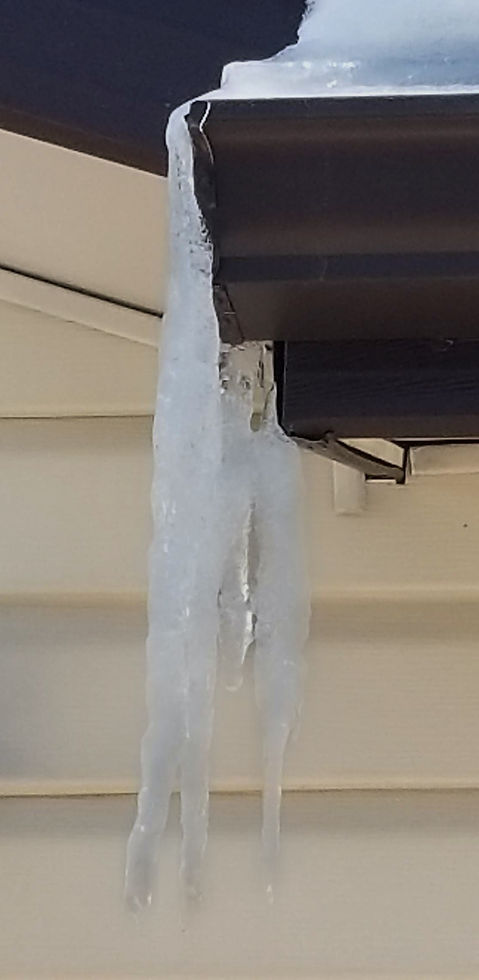
Icicles may look harmless — even pretty — but they’re a warning sign.
What’s happening:
Warm air from the attic melts snow on the roof.
Melted water runs to colder roof edges and gutters.
The water refreezes, forming icicles or ice dams.
Ice dams prevent proper drainage, forcing water back under shingles where it can:
Damage roof decking
Cause interior leaks
Promote mold growth
Damage insulation
North‑facing and shaded rooflines are especially susceptible.
5. Siding & Exterior Paint Damage in Below‑Freezing Weather
Cold temperatures affect siding materials differently, but all can suffer in winter conditions.
Potential issues include:
Vinyl siding becoming brittle and cracking
Wood siding swelling and shrinking, leading to gaps
Paint peeling or blistering when moisture freezes beneath it
Once cracks or gaps form, moisture intrusion increases — compounding damage with each freeze–thaw cycle.
6. Fascia, Soffit & Trim Rot Caused by Ice and Poor Drainage
Fascia and soffit boards are often overlooked until visible damage appears.
When gutters overflow or ice builds up:
Water saturates fascia boards
Frozen moisture expands within the wood
Paint fails, exposing raw material
Rot and structural deterioration begin
This damage can spread quickly and often requires replacement if not addressed early.
7. Foundation & Concrete Cracking from Frozen Soil and Poor Drainage
When gutters are damaged, improperly pitched, or clogged with ice, they may fail to route water safely away from your home. Instead, water can pool along the sides of the foundation, creating serious risks during freezing weather.
Here’s why this matters:
Excess water seeps into the soil surrounding the foundation
When temperatures drop, that saturated soil freezes and expands
The expansion puts pressure on foundation and basement walls
Over time, this can lead to:
Cracks in foundation walls
Cracks in basement walls
Water intrusion into basements or crawl spaces
Long-term structural concerns if left unaddressed
This issue is especially common in freeze–thaw climates like Colorado, where melting snow during the day refreezes at night. Properly functioning gutters and downspouts — routed well away from the home — play a critical role in preventing foundation movement and water damage.
8. Winter Safety Hazards Around Your Home’s Exterior
Freezing conditions don’t just damage your home — they can create safety risks.
Watch for:
Icicles falling from roof edges
Ice forming on sidewalks from dripping gutters
Water refreezing beneath downspouts
These conditions increase slip‑and‑fall risks for homeowners, guests, and delivery personnel.
How to Protect Your Home from Freezing Temperatures and Water Damage
Proactive maintenance goes a long way.
Smart winter prep includes:
Cleaning and inspecting gutters before winter
Ensuring downspouts drain away from the foundation
Inspecting fascia and roof edges annually
Sealing exterior cracks before cold sets in
Checking attic insulation and ventilation
Addressing drainage issues early
Frequently Asked Questions About Freezing Temperatures & Home Damage
How do freezing temperatures damage a home’s exterior?
Freezing temperatures allow moisture to seep into small cracks and seams in gutters, siding, roofing, and concrete. When that moisture freezes, it expands, widening cracks and causing long-term structural and cosmetic damage through repeated freeze–thaw cycles.
Why are gutters so important in freezing weather?
Gutters control where water goes. When gutters are clogged, damaged, or improperly pitched, water can freeze inside the system, split seams, pull gutters away from the fascia, and overflow near the foundation — increasing the risk of ice dams, rot, and foundation damage.
Can improperly installed gutters cause ice dams?
Yes. Gutters that hold standing water due to improper pitch can freeze and contribute to ice buildup at roof edges. When combined with poor attic insulation or ventilation, this can lead to ice dams that trap water under shingles and damage roofing materials.
How do frozen gutters affect a home’s foundation?
If gutters fail to move water away from the home, water can pool around the foundation. When that saturated soil freezes, it expands and places pressure on foundation and basement walls, potentially causing cracks and water intrusion.
Are icicles a sign of a problem?
Often, yes. Icicles typically indicate melting snow refreezing at the roof edge, which may be caused by heat loss from the attic, frozen gutters, or poor drainage. While small icicles aren’t always harmful, large or persistent icicles signal conditions that can lead to damage.
How can homeowners prevent freeze–thaw damage?
Preventing freeze–thaw damage starts with proper drainage. Keeping gutters clean, ensuring correct gutter pitch, extending downspouts away from the foundation, sealing exterior cracks, and maintaining good attic insulation all help reduce winter-related damage.
When should I call a professional?
If you notice sagging gutters, leaking seams, ice dams, water near the foundation, or recurring icicles, it’s a good idea to call a professional. Early inspections can prevent small winter issues from turning into costly repairs.
A Note on Winter Conditions in Denver and Colorado
Colorado winters can be unpredictable, and no single system or upgrade can eliminate every risk associated with freezing temperatures. While properly installed and maintained gutters play an important role in managing water and protecting your home’s exterior, winter performance is influenced by many factors beyond the gutter system itself.
Things like attic insulation and ventilation, roof design, sun exposure, snowfall patterns, and rapid temperature changes all affect how snow and ice behave on a home. Even well-installed gutters may still experience ice buildup or winter-related challenges during extreme freeze–thaw conditions.
This is why a whole‑home approach — combining good drainage, proper installation, and attention to insulation and ventilation — offers the best protection over time.
Final Thoughts: Protecting Your Home from Freezing Temperatures in Colorado
Below-freezing temperatures are a fact of life in Colorado — but exterior damage doesn’t have to be. Most winter-related issues stem from moisture, poor drainage, and delayed maintenance. Catching small problems early can prevent major repairs later.
If you’re noticing gutter issues, ice buildup, drainage problems, or exterior damage caused by freezing temperatures, Hometown Gutter is always happy to help. Gutters and drainage are our specialty, and we focus on practical, no-pressure recommendations that protect your home.
And if an issue falls outside our scope, we’re still here as a resource. We work alongside many trusted local contractors and are glad to point homeowners in the right direction — because taking care of your home sometimes starts with getting honest guidance, even if that means calling someone else.
Protecting your home and treating homeowners the way we’d want our own family treated is always our priority.
Written with Colorado homeowners in mind, where freeze–thaw cycles are a seasonal reality.


Nice post and great information. A Side Lamp Three Layer can really enhance the look of a bedroom while also keeping things organized. The layered design makes it convenient to store books, phones, or decorative items. Thanks for sharing such creative ideas.