
Denver Gutter Ice Issues: The North-Side Rule — Why One Side of Your House Ices Up First in Colorado
- Victoria Krumtum - Hometown Gutter

- Dec 11, 2025
- 5 min read
Updated: Jan 20
For homeowners across the Denver metro area, winter brings the familiar mix of heavy snow, freeze–thaw cycles, icy sidewalks, and the occasional surprise breakup of the Broncos' offensive line. But one problem shows up reliably every year: one side of the house ices up first — and usually worse — than all the others.
We call this the North-Side Rule, and it’s one of the most predictable (and preventable) Denver gutter ice issues you’ll see on a home.
This is not a myth, and it’s not just random cold-weather behavior. It’s a blend of building science, solar exposure, and the dramatic winter temperature swings unique to the Front Range.
---
Why Denver Gutter Ice Issues Start on the North Side of a Home
Colorado’s winter climate hits homes harder than most regions in the U.S. because of its low humidity, intense sunlight, rapid temperature fluctuations, and elevation-driven thermal contrast. These factors make Denver gutter ice issues show up earliest and most aggressively on the north-facing side of a home.
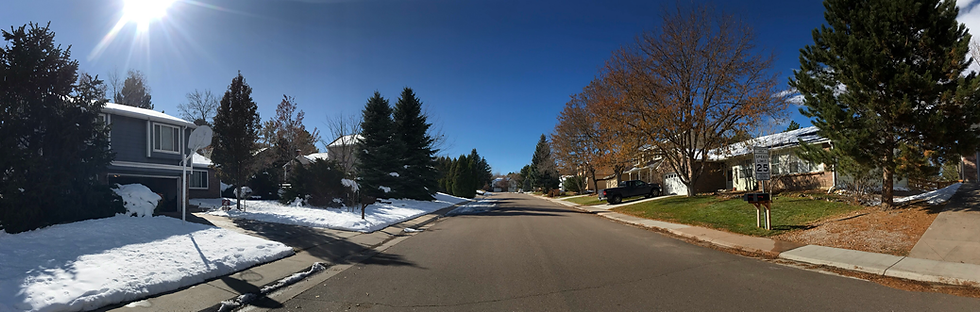
1. The North Side Gets Almost Zero Winter Sun
From late fall through early spring, the north-facing roofline receives no direct sunlight, which means:
Snow takes dramatically longer to melt
Surfaces stay colder than the rest of the roof
Meltwater refreezes quickly in gutters and downspouts
Even a small temperature difference can trigger early-stage Denver gutter ice issues.
2. Freeze–Thaw Cycles Are Stronger on North-Facing Eaves
Denver’s climate can jump from 50°F to subzero in a single day. When temperatures rise:
Snow melts and runs toward the gutters
Meltwater reaches the shaded, colder north eave and it refreezes instantly.
This repeated freeze–thaw cycle is the foundation of Denver gutter ice issues like ice dams and solid-frozen downspouts.
3. Attic Insulation & Ventilation Problems Hit the North Side First
Warm air leaking from the attic accelerates melting from underneath the snowpack. But when that meltwater runs down the roof:
It hits the cold, shaded north eaves
Refreezes
Forms ice dams faster than on any other side
Even new roofs or homes with gutter guards can experience the north-side Denver gutter ice issues when insulation and airflow are not properly balanced.
4. Gutter Guards Change Ice Behavior — Especially in Denver

Gutter guards (including LeafBlaster Pro) are likely to have issues on the North side. All gutter guards have bigger ice issues. They work great to keep the gutter clear, but often the water freezes on top of the gutter prior to melting into the gutter, especially on the North.
Snow can bridge over the screen
Meltwater may flow across the guard and freeze at the edge
Icicles appear earlier on the north side
Frozen sheets can form on top of the guard
This is why understanding the North-Side Rule is essential for preventing Denver gutter ice issues on guarded systems.
It is best to know you may need heat cable on the North side to melt the ice on top of the filter.
---
How to Spot Early Denver Gutter Ice Issues on the North Side
North-facing gutter problems don’t appear suddenly — they develop in predictable stages. Homeowners can prevent major repairs by watching for early warning signs.
Look for:
Icicles forming earlier on one side
Downspouts freezing solid from bottom to top
Overflow “sheeting water” during daytime melt
Water dripping onto sidewalks or driveways
Roof “zebra striping,” visible from across the street
Sagging gutters, especially older systems installed with spikes
These are all early-stage red flags for Denver gutter ice issues and are most commonly observed along shaded or north-facing eaves.
---
Why Denver Gutter Ice Issues Can Lead to Major Home Damage
The North-Side Rule isn’t just annoying — it has real structural consequences if left untreated.
1. Gutter Sag or Pull-Away
Older gutters installed with spikes and ferrules instead of hidden hangers often loosen under the weight of ice.
Frozen gutters can weigh hundreds of pounds, making sagging one of the most common Denver gutter ice issues.
2. Fascia Rot & Water Intrusion
Ice dams can force water backward under shingles, leading to:
Soaked fascia boards
Interior leaks
Mold and rot
This is especially common in neighborhoods with mature trees and older construction, such as Park Hill, Washington Park, and Mission Viejo.
3. Sidewalk Ice Hazards
Overflow from north-facing gutters often drips onto:
Entry steps
Walkways
Driveways
This creates sheet ice — one of the most dangerous Denver gutter ice issues for homeowners and visitors.
4. Downspout Splitting
Frozen downspouts expand until they:
Crack seams
Split open
Disconnect from elbows
The north side almost always fails first.
---
Professional Solutions for Denver Gutter Ice Issues
At Hometown Gutter, we handle thousands of freeze-related gutter service calls each winter across Denver, Aurora, Parker, Lakewood, Thornton, Castle Pines, and surrounding areas. The North-Side Rule is nearly universal — but highly fixable.
1. Heating Cable Installation for North-Facing Gutters
Heating cable is one of the most effective tools for reducing Denver gutter ice issues because it:
Keeps the gutter line open
Prevents downspout freezing
Reduces ice dam formation
Works extremely well with gutter guards
2. Upgrading to 6-Inch Gutters
Many homes in the Denver metro area — especially newer builds and large-roof neighborhoods like The Pinery or Highlands Ranch — need 6-inch gutters to accommodate rapid snowmelt.
Bigger gutters = fewer Denver gutter ice issues, especially on shaded sides.
3. Replacing Old Spiked Gutters With Hidden Hangers
Hidden hangers every 2 feet dramatically improve strength under ice load.
4. Insulation & Ventilation Review
Because ice begins with roof temperature, not gutters, we often identify attic issues contributing to Denver gutter ice issues long before homeowners notice them.
---
When Homeowners Should Call a Professional
If your north side is showing signs of:
Early icicle formation
Overflow after light melts
Downspout freezing
Sagging gutters
Ice buildup on sidewalks
…it’s time to bring in a professional before more extensive damage occurs.
---
Final Thoughts on Denver Gutter Ice Issues and the North-Side Rule
The North-Side Rule isn’t a problem — it’s a predictable pattern based on sunlight, temperature, and roof design. When homeowners understand it, they can take proactive steps to prevent costly damage.
Denver gutter ice issues may be unavoidable in winter, but with the right upgrades and maintenance, they are 100% manageable.
Call the problem solvers at Hometown Gutter (720) 440 -RAIN or use the Contact Us form.


We face the sunny side at this house. I'm so glad (because of course it was an accident) that we face the sun. Yes, my front yard BAKES in the summer, but so much better than shoveling snow and breaking ice like they have to do across the street.