
Soffit Damage: What Soffit Is, Why It Matters, and How Fascia Water Damage Leads to Soffit Problems
- Victoria Krumtum - Hometown Gutter

- 1 day ago
- 4 min read

Many homeowners know their gutters and roof protect their home — but few understand the importance of the soffit.
Your soffit works together with your fascia to protect your roofline, attic, and ventilation system. When fascia is exposed to water damage, that moisture often spreads directly into the soffit — which is why these two parts of your home commonly fail together.
The good news is that soffit problems are often simple to repair when caught early.
Let’s look at what soffit is, what it does, why it matters, and how fascia damage can lead to soffit deterioration.
What Is Soffit on a House and What Does Soffit Do?


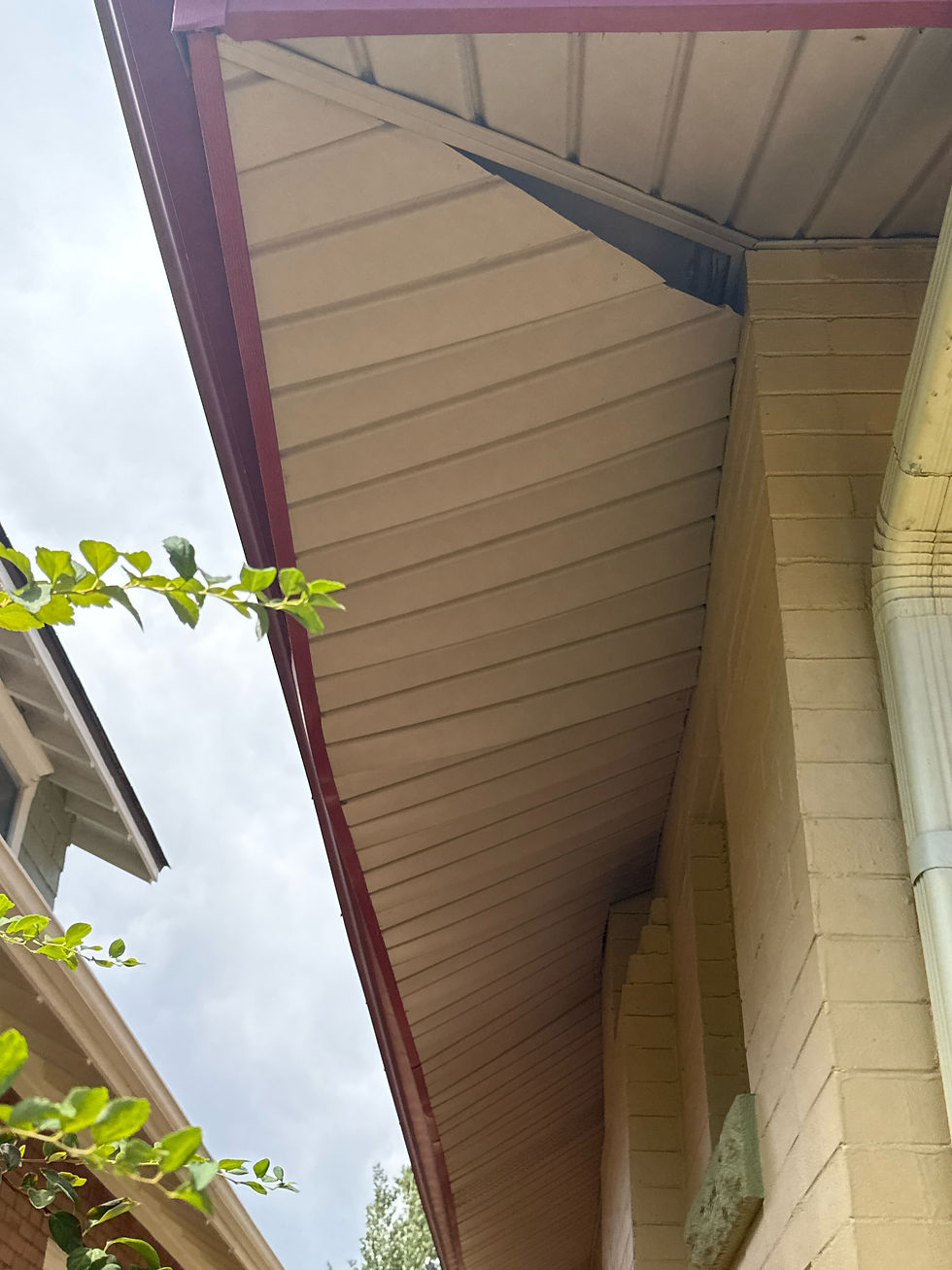
The soffit is the finished surface located underneath the roof overhang — the horizontal underside of your eaves that connects the edge of the roof to the exterior wall of your home.
You see soffit every time you look up at the underside of your roofline.
Soffit serves several important functions:
✔ Covers and protects exposed roof framing
✔ Helps ventilate your attic
✔ Prevents moisture buildup in roof spaces
✔ Blocks pests and animals from entering
✔ Helps regulate temperature and airflow
✔ Creates a clean, finished exterior appearance
Many soffits contain ventilation holes or vent panels that allow air to circulate through the attic. This airflow is critical for preventing heat buildup, condensation, and mold.
Without a properly functioning soffit, your attic cannot breathe.
Why Soffit Is Important for Roof Ventilation and Moisture Control
Proper attic ventilation is one of the most important — and most overlooked — parts of protecting your home.
Your soffit works with ridge vents or roof vents to create continuous airflow. Fresh air enters through soffit vents and exits through upper roof ventilation points.
This circulation helps:
✔ Prevent moisture buildup
✔ Reduce mold and mildew risk
✔ Protect insulation
✔ Extend roof lifespan
✔ Improve energy efficiency
✔ Prevent wood rot in roof structures
When soffit is damaged, blocked, or rotting, this airflow is disrupted — and moisture problems can begin inside the attic where homeowners can’t see them.
Signs of Soffit Damage and Rot Homeowners Should Watch For
Soffit damage often develops slowly and may go unnoticed from the ground. Common warning signs include:
Peeling or bubbling paint under the roof overhang
Dark staining or water marks
Soft or crumbling material
Visible holes or gaps
Sagging soffit panels
Poor attic ventilation or musty smells
Increased pest or bird activity near eaves
Any of these signs may indicate moisture intrusion or structural deterioration.
How Fascia Water Damage Leads to Soffit Damage
Fascia and soffit are directly connected along your roofline — which means problems in one often affect the other.
When gutters overflow, leak, or allow water behind them, the fascia board absorbs moisture first. Over time, that moisture spreads inward and downward into the soffit panels.
This is why fascia rot and soffit damage commonly occur together.
Water intrusion can cause:
✔ Softened wood✔ Paint failure✔ Structural deterioration✔ Mold growth✔ Vent blockage✔ Pest access points
If fascia damage is not repaired, moisture exposure can continue spreading along the entire roof edge.
Soffit Damage and Pest Entry: Why Animals Target Roof Overhangs
Damaged soffit creates easy entry points for wildlife.
Common attic intruders include:
Birds building nests inside roof cavities
Squirrels chewing through softened wood
Rodents entering through small openings
Raccoons pulling open weakened panels
Once animals enter attic spaces, they may damage insulation, contaminate areas, and chew electrical wiring — which can create serious safety risks.
Soffit damage is often discovered only after homeowners hear scratching or movement overhead.
Can Soffit Be Repaired Easily If Damage Is Found Early?
In many cases — yes.
When caught early, soffit repair can be straightforward and localized.
Common early repairs may include:
✔ Replacing small sections of damaged soffit✔ Sealing entry points✔ Restoring proper ventilation✔ Repairing fascia and gutter issues causing moisture✔ Repainting and sealing exposed areas
If rot is present but has not created structural holes, early repair can stop deterioration before pests or major moisture damage develop.
Addressing problems quickly helps protect the entire roofline system.
When Should Homeowners Have Their Soffit Inspected?
It’s wise to have soffit inspected if you notice:
Fascia rot or gutter overflow
Peeling paint along roof overhangs
Signs of moisture near eaves
Animal activity around roof edges
Poor attic ventilation
Musty attic odors
Because fascia and soffit often fail together, inspecting both at the same time provides the most complete protection.
Protect Your Home by Addressing Soffit and Fascia Damage Early
Soffit damage doesn’t have to become a major repair — especially when caught early.
In many situations, the solution is simple: correct the moisture source, repair the affected area, and restore proper protection and ventilation.
Because fascia and soffit work together, repairing one without evaluating the other can allow problems to return. A full roofline inspection helps ensure everything is functioning properly. If you spot any damage or what could be damage. Call Hometown Gutter at (720) 440 - RAIN (7246). They repair gutter if it is the cause of moisture and repair the soffit and fascia. This is the first thing as a homeowner you can do to stop the damage.
No matter what stage of wear your soffit is in — early, moderate, or advanced — solutions are available.
Protecting your roofline today helps prevent bigger problems tomorrow.


Comments